.png)
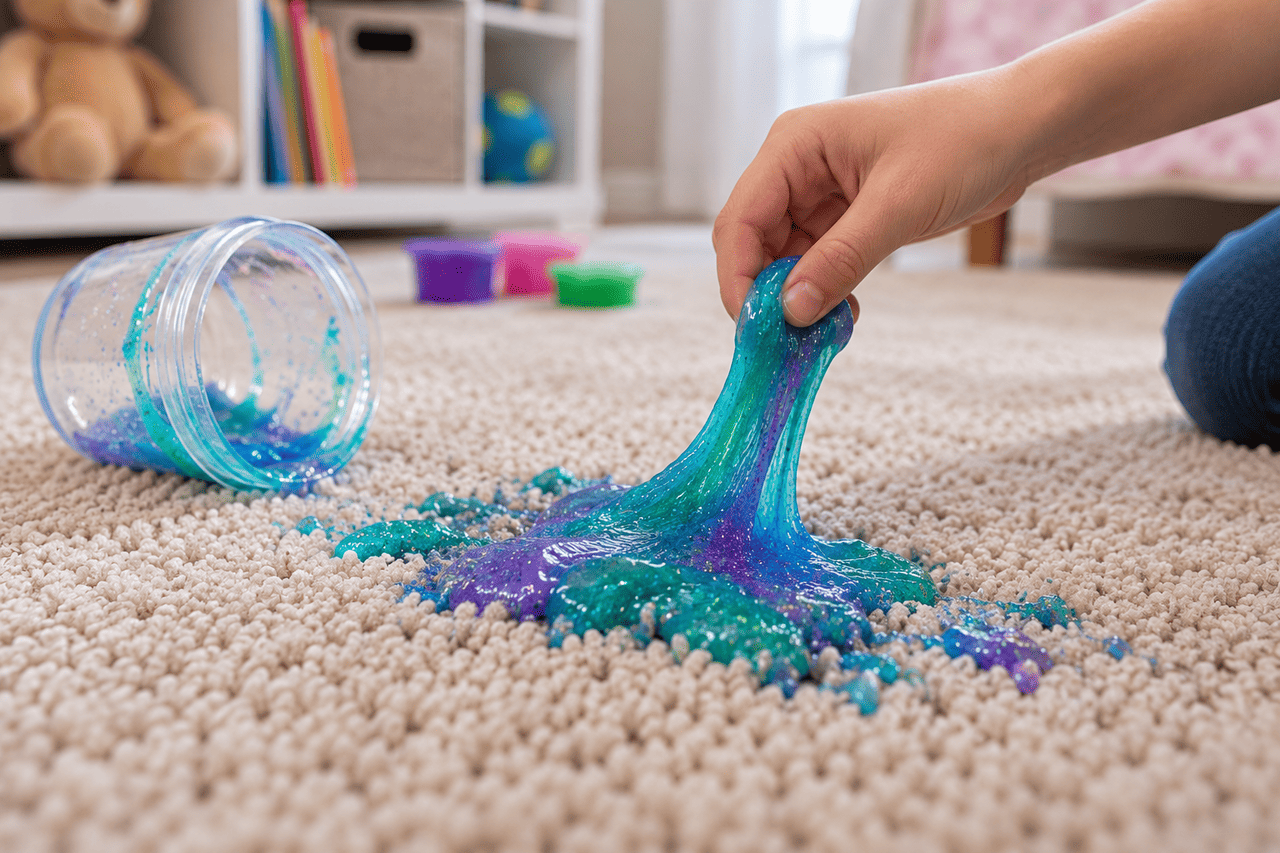
Slime is fun until it ends up embedded in your carpet.
What starts as a children's craft or rainy-day activity can quickly turn into a sticky carpet problem. Slime can cling to individual fibers, spread when rubbed, dry into a hardened patch, and sometimes leave behind coloring even after the sticky material has been removed.
Fortunately, slime on carpet does not automatically mean the carpet is ruined.
The key is to approach the mess carefully. Pulling aggressively, scrubbing the area, pouring large quantities of cleaner onto the carpet, or experimenting with several chemicals can turn a relatively small spot into a much larger problem.
If you're wondering how to get slime out of carpet, the correct approach depends on whether the slime is fresh or dried, what ingredients are in it, and whether it has left a separate dye stain behind.
This guide walks you through the process.
Slime and carpet are a particularly troublesome combination.
Carpet contains thousands of fibers with spaces between them. Soft slime can work its way around those fibers instead of simply sitting on top of the carpet.
Depending on the recipe or product, slime may contain ingredients such as:
The slime itself is only one potential problem.
Coloring can create a separate stain. Glitter and decorative materials can spread into surrounding carpet. Dried slime can also bind multiple fibers together.
This is why the first objective should be removing the physical slime without spreading it.
Fresh slime is generally easier to address than slime that has been allowed to dry completely.
If you discover the mess quickly, resist the urge to immediately scrub it with a wet towel.
Instead, start by removing as much of the slime itself as possible.
If a large amount of slime is sitting on top of the carpet, gently lift it away.
You can use your fingers if practical or a spoon or other dull-edged tool.
Work slowly.
Try to lift the slime upward rather than pushing it farther into the carpet.
If the slime stretches, continue working from the outside toward the center.
Do not rub fresh slime back and forth.
That can spread the sticky material across additional fibers and enlarge the affected area.
The goal is controlled removal.
After removing the bulk of the slime, look closely at the carpet.
You may be dealing with:
The next step depends on what remains.
Once the bulk of the slime is gone, some sticky residue may remain attached to the fibers.
Start conservatively.
For compatible carpeting, a small amount of mild cleaning solution may help loosen surface residue.
You will need:
Add a small amount of dishwashing liquid to water.
Do not create an excessively concentrated soap mixture.
Apply the solution to a clean cloth rather than pouring it directly onto the carpet.
Gently blot the affected fibers.
As residue transfers to the cloth, move to a clean section.
Afterward, use another cloth lightly dampened with clean water to help remove remaining detergent.
Finish by blotting with a dry towel.
Dried slime can look much worse because it may form a hard patch around the carpet fibers.
Do not assume you need to cut it out.
In many situations, you can begin by carefully loosening the dried material.
Use your fingers or a dull-edged tool to gently loosen pieces that separate easily.
Avoid sharp blades.
Carpet fibers can be cut surprisingly easily, and cutting out a slime spot can leave permanent visible damage.
A controlled amount of moisture may help soften some dried slime.
Use a damp cloth and work gradually rather than soaking the carpet.
Give the moisture time to interact with the residue.
As the dried material softens, carefully work it away from the carpet fibers.
Do not yank on fibers that remain firmly attached.
Repeat the process if necessary.
Once the physical slime has been removed, use an appropriate carpet-safe spot treatment if residue remains.
Always follow product instructions and test new cleaning products in an inconspicuous area when recommended.
Sometimes you successfully remove all the sticky slime and discover that the carpet is still pink, green, blue, purple, or another color.
At that point, you are no longer dealing primarily with slime.
You are dealing with a dye stain.
This distinction matters.
The physical material and the coloring may require different treatment.
Do not continue scraping once the slime itself is gone. Scraping will not remove color that has transferred into the carpet fibers.
Instead, assess the stain.
If you have the slime packaging or know the recipe, check what coloring was used.
For a commercial slime product, the packaging may contain useful ingredient or cleanup information.
Vinegar is one of the most frequently suggested DIY solutions for slime.
It may help with certain slime formulations, but it should not automatically be applied to every carpet.
Carpet materials and dyes vary.
If you decide to try a vinegar-based treatment, first confirm that it is appropriate for your carpet and test it in a hidden area.
Use controlled amounts.
Pouring a large quantity of vinegar directly onto the carpet can introduce unnecessary moisture.
Also avoid mixing vinegar with unrelated household cleaning chemicals.
A mild dishwashing solution can be useful for some remaining sticky residues after the bulk of the slime has been physically removed.
However, more soap is not better.
Using too much detergent can create its own carpet problem.
Soap residue left in carpet may feel sticky and can attract soil over time.
Use a small amount, then carefully remove the residue with a clean damp cloth.
Baking soda is often recommended for carpet cleaning, but it is not a universal slime remover.
It may have uses in certain household cleaning situations, but the first priority with slime should be removing the actual material from the carpet.
Avoid repeatedly applying different substances just because they appear in online cleaning recipes.
A controlled process is preferable to layering multiple DIY products.
You may see advice suggesting ice for sticky substances.
Cooling can make some materials firmer and easier to lift.
Whether it helps with slime depends on the slime formulation.
If you try cooling the material, avoid soaking the carpet as the ice melts.
Place ice in a sealed bag rather than allowing water to spread through the fibers.
Once the slime becomes firmer, gently test whether it can be lifted.
Do not pull aggressively.
Rubbing alcohol is sometimes recommended for sticky residue and certain craft materials.
However, solvents require caution on carpet.
They can potentially affect dyes, backing, adhesives, or other components.
Before applying alcohol or another solvent, check your carpet manufacturer's recommendations and test the product in an inconspicuous area.
If the carpet is valuable, delicate, or made from natural fibers, professional advice may be preferable.
Hydrogen peroxide is sometimes suggested for colored carpet stains.
It can also affect color.
That makes indiscriminate use risky, especially on darker carpet.
Do not assume that removing the slime's color without affecting the carpet's color is guaranteed.
If you are uncertain about the carpet's dye stability, avoid experimenting with oxidizing products.
A few mistakes can make slime much harder to remove.
Scrubbing can spread fresh slime into a wider section of carpet.
It can also distort fibers.
Dried slime can bind fibers together.
Aggressive pulling may damage them.
Avoid using scissors, razor blades, or sharp knives to remove slime.
You may remove the slime but leave a permanent bald spot.
Large quantities of water can carry dissolved slime ingredients or coloring deeper into the carpet.
Use controlled moisture.
Avoid combining vinegar, peroxide, bleach, ammonia, alcohol, commercial cleaners, or other products unless the manufacturer specifically says the combination is safe.
Household bleach can permanently alter carpet color.
If several reasonable attempts have failed, stop before creating permanent damage.
Professional stain treatment may be the better option.
Glitter slime adds another challenge.
After the sticky material has been removed, small pieces of glitter may remain scattered through the carpet.
Allow the treated area to dry appropriately before vacuuming.
Once dry, vacuum slowly and thoroughly.
You may need several passes in different directions to collect loose glitter.
Avoid vacuuming large amounts of wet or sticky slime.
That can create a mess inside the vacuum and may spread the material.
Long-pile or shag carpeting can be more difficult because slime has more fiber surface area to cling to.
The same basic principles apply:
Take your time.
Aggressive pulling is particularly risky with longer fibers.
Wool and other natural-fiber carpets deserve extra caution.
A DIY method that may be tolerated by a common synthetic carpet is not automatically appropriate for wool.
Moisture, alkalinity, cleaning chemistry, temperature, and agitation can all matter.
If slime is embedded in an expensive wool carpet or rug, professional evaluation may be the safest approach.
First identify the rug material if possible.
Machine-made synthetic rugs may have different care requirements from wool, handmade, antique, or specialty rugs.
Avoid saturating the rug, particularly if you do not know whether the dyes are stable.
Remove the physical slime first.
Then address remaining residue according to the rug's care instructions.
For valuable or delicate rugs, avoid aggressive DIY treatments.
Do not panic.
A dried slime spot can look permanent while still being treatable.
The process simply requires more patience.
Start by removing loose material.
Then carefully soften the remaining residue.
Avoid jumping immediately to strong solvents.
If a colored stain remains after the slime has been removed, treat it as a separate staining problem.
If the area is large or the carpet begins to show signs of discoloration or fiber damage, stop and consider professional assistance.
Professional carpet cleaning may help with remaining slime residue and associated staining, depending on the carpet and slime involved.
Results can vary based on:
If possible, keep the slime container or recipe information.
Knowing what was spilled can help when assessing a stain.
No responsible cleaner should guarantee complete stain removal without considering the specific situation.
Children's crafts, food spills, pet accidents, tracked-in dirt, and everyday household activity can all leave carpets looking less than their best.
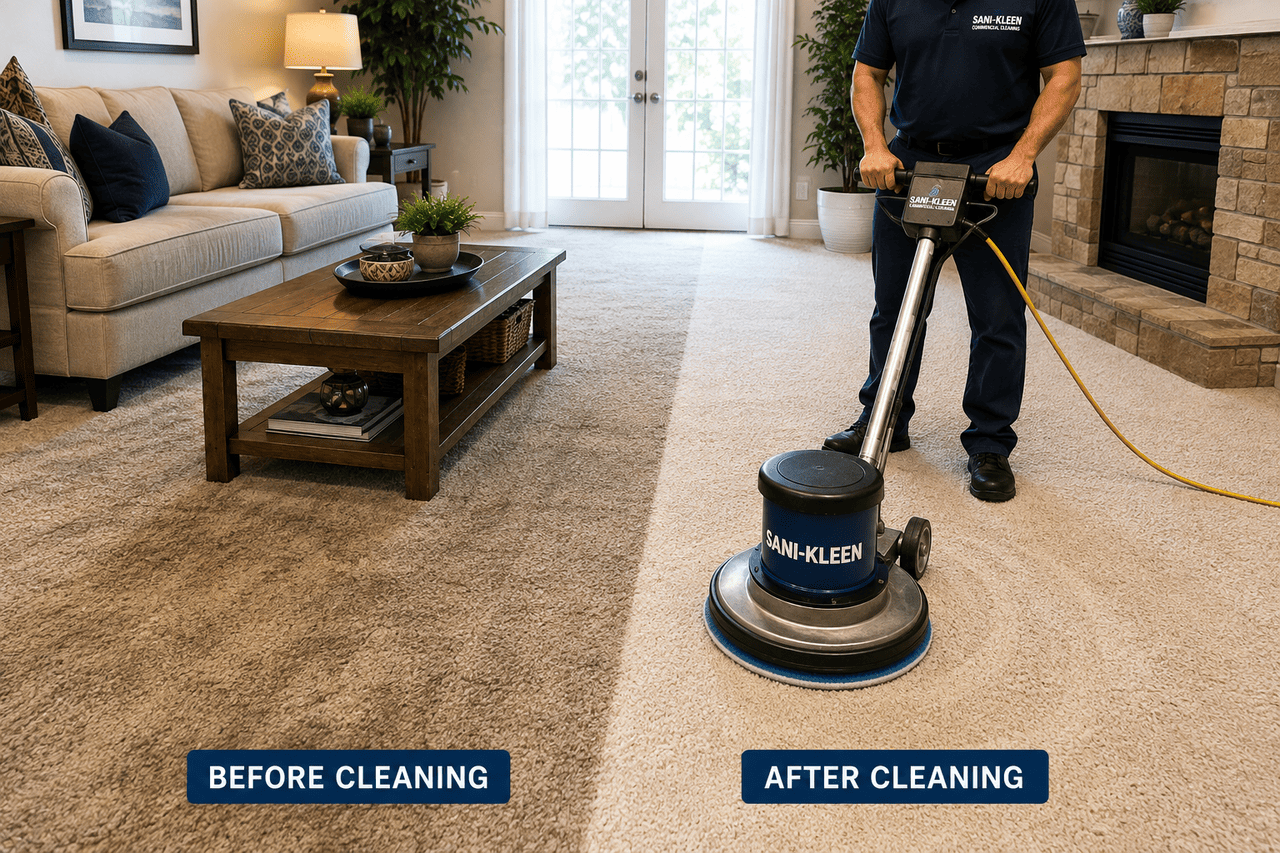
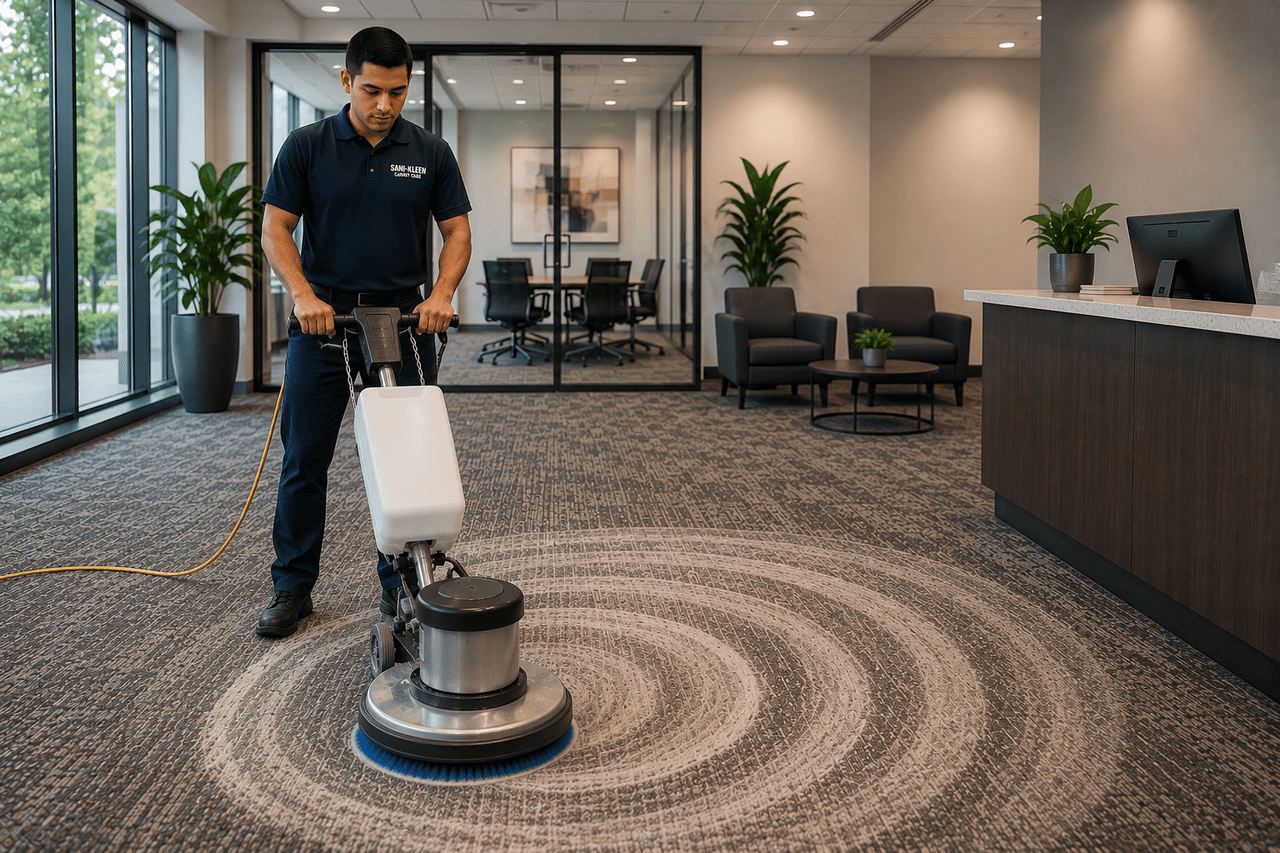
If a slime stain remains after careful home treatment, Sani-Kleen of Savannah LLC provides professional carpet cleaning throughout Savannah and surrounding communities.
Sani-Kleen has served the Savannah area since 2003.
Our services include residential carpet cleaning, commercial carpet cleaning, sanitizing and odor elimination, upholstery and furniture cleaning, and area rug cleaning.
We use eco-friendly, fast-drying cleaning methods designed to refresh carpets without unnecessarily long drying periods.
If you have already treated a slime stain, tell us which products you used when you contact us.
Prevention can save a lot of cleanup.
Encourage children to use slime at a table rather than directly on the floor.
If possible, slime activities are easier to manage in rooms with tile, vinyl, or another washable hard surface.
Place a washable mat or other appropriate protective surface beneath the activity area.
When slime is not being used, return it to a sealed container.
Small pieces of slime can stick to sleeves, knees, socks, or other clothing and later transfer onto carpet.
Fresh slime is generally easier to handle than a dried patch discovered several days later.
Do not vacuum soft, wet, or sticky slime.
A vacuum is designed primarily for dry loose debris, not sticky craft material.
Wet slime can adhere to vacuum components and potentially spread through the machine.
Remove the slime manually first.
Once the area is dry and only loose particles such as glitter or dried crumbs remain, normal vacuuming may be appropriate.
Slime can contain coloring that transfers into carpet fibers.
This means there can be two separate problems:
Removing the first does not guarantee the second disappears.
If the remaining dye does not respond to a carpet-safe spot treatment, professional stain treatment may be appropriate.
Avoid escalating immediately to bleach or other aggressive chemicals.
Slime is only one of many things that can end up on family-room or bedroom carpet.
Homes with children may also experience:
Regular vacuuming and prompt spot treatment can prevent many small problems from becoming major ones.
Keep appropriate carpet-cleaning supplies available, but avoid creating a collection of strong chemicals that get applied randomly to every stain.
Different substances require different approaches.
Start by physically lifting as much slime as possible without rubbing it deeper into the carpet. Once the bulk is gone, carefully treat the remaining residue with a carpet-compatible cleaning method.
Gently remove loose dried material, then use controlled moisture to soften remaining slime if appropriate for the carpet. Work slowly and avoid pulling or cutting carpet fibers.
Vinegar is commonly suggested for some slime formulations, but it is not appropriate to assume it is safe for every carpet. Test cleaning solutions in an inconspicuous area and follow the carpet manufacturer's care recommendations.
If color remains after the sticky material is removed, you are dealing with a dye stain. Use a carpet-compatible stain treatment and avoid strong bleaching products unless specifically approved for the carpet.
Baking soda is frequently used in household cleaning, but it should not replace physical removal of the slime itself. Avoid combining several DIY products without knowing how they interact.
Do not vacuum wet or sticky slime. Remove it manually first. Vacuuming may be useful later for dry loose debris such as glitter.
Some slime can leave permanent discoloration, particularly if strong dyes are involved or inappropriate cleaning products damage the carpet. Prompt, careful treatment improves your chances of a good result.
Professional cleaning may help remove remaining residue or staining, but results depend on the slime ingredients, carpet fiber, dye, age of the stain, and previous cleaning attempts.
Consider professional carpet cleaning if:
Sometimes stopping early is better than repeatedly applying stronger products.
If slime, paint, red wine, pet accidents, dirt, or other stains have left your carpet looking worse for wear, Sani-Kleen of Savannah LLC can help.
We provide professional carpet cleaning throughout Savannah and surrounding communities, including Pooler, Richmond Hill, Port Wentworth, Garden City, Wilmington Island, Tybee Island, Rincon, Springfield, Guyton, and Skidaway Island.
Sani-Kleen has served the area since 2003 and uses eco-friendly, fast-drying cleaning methods.
Our current carpet-cleaning special is 3 Rooms & a Hallway for $130.
Call Sani-Kleen of Savannah at (912) 414-0652 to request a quote or schedule carpet cleaning.



%20(1).png)