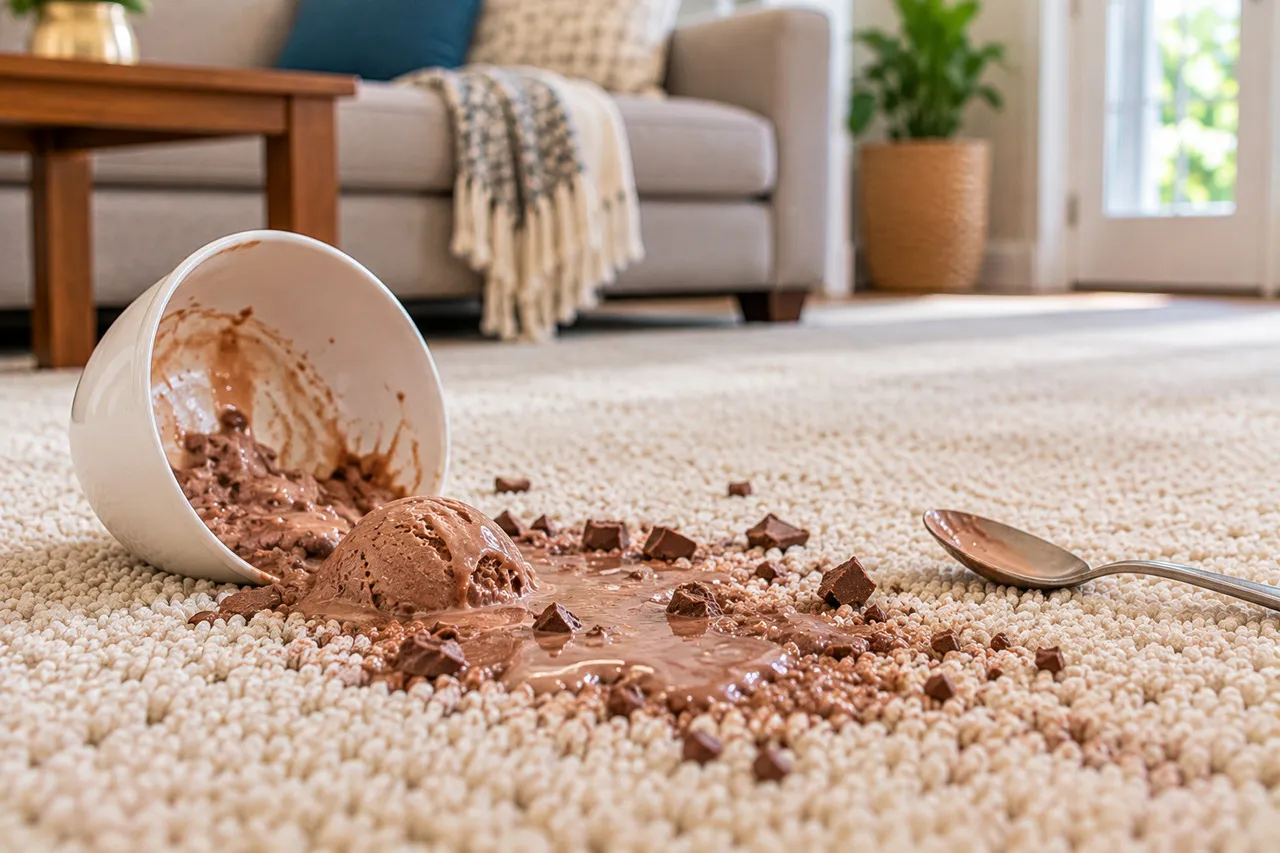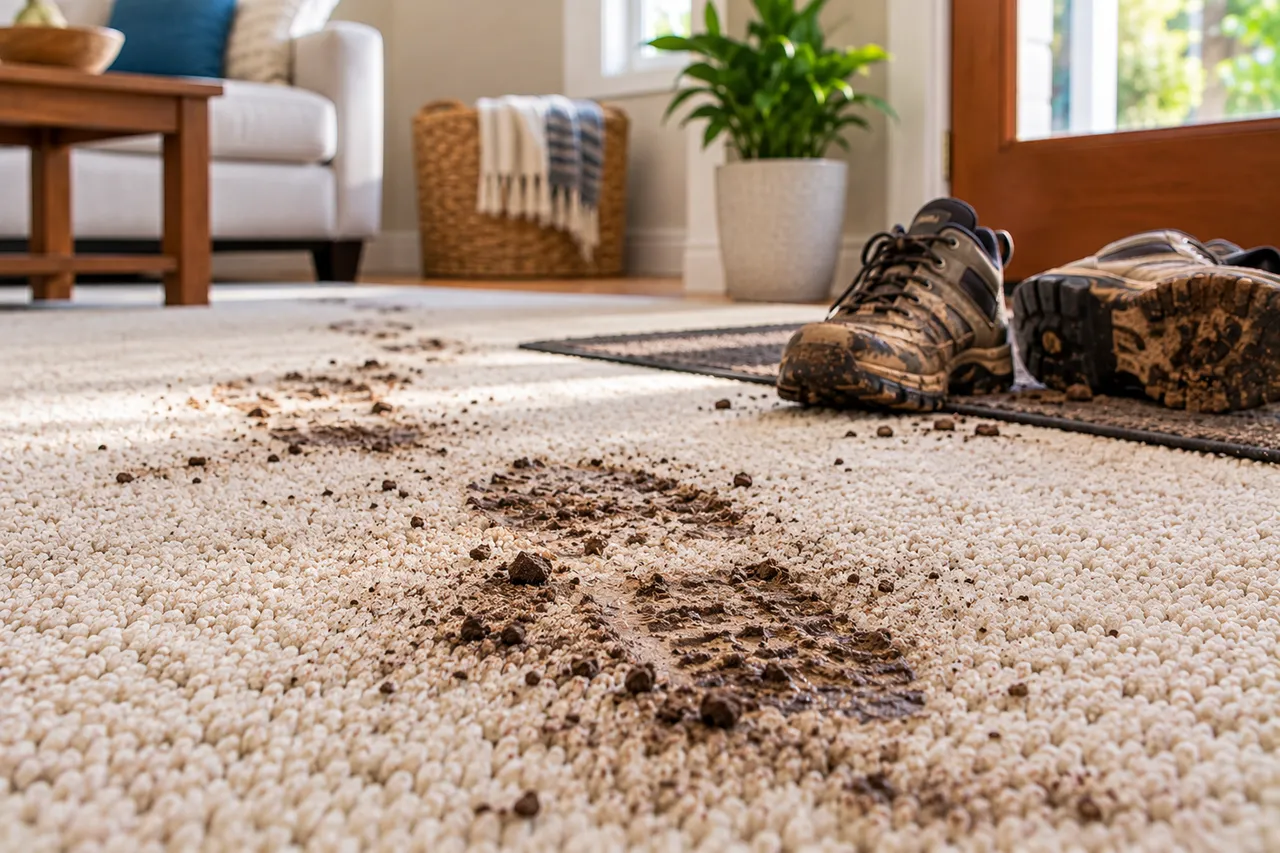
Muddy footprints can turn a clean carpet into a mess in seconds. Whether children come inside after playing outdoors, a dog runs through the house with muddy paws, or someone tracks dirt in after a rainstorm, mud stains are a common household problem.
The natural reaction is to grab a wet towel and start scrubbing. Unfortunately, that can make the situation worse.
Mud contains soil particles, moisture, and sometimes organic material. When you rub wet mud into carpet, you can push those particles deeper into the fibers and spread the stain across a larger area.
The good news is that many mud stains can be removed with a careful cleaning process.
One of the most important things to understand is that wet mud and dried mud should not always be treated the same way.
If you're wondering how to get mud out of carpet, this guide explains how to handle fresh muddy footprints, remove dried dirt, clean remaining discoloration, and avoid common mistakes that can damage carpet.
Mud is a mixture of water and soil.
Depending on where it comes from, the soil may contain clay, sand, silt, organic material, and other particles.
These materials behave differently when they become trapped in carpet.
For example, sand may remain relatively loose, while fine clay particles can cling more stubbornly to fibers.
Several factors influence how difficult a mud stain will be to remove:
The goal is to remove as much physical soil as possible before using a cleaning solution.
For many ordinary muddy footprints, allowing the mud to dry before vacuuming can be an effective approach.
This may seem counterintuitive, especially when you want the stain gone immediately.
However, wet mud can smear when rubbed.
Once it dries, much of the soil may become loose enough to remove with a vacuum.
There is one important distinction: you should not leave the carpet heavily saturated or ignore a large amount of muddy water.
If there is standing liquid or significant moisture, blot up the excess promptly.
For a small amount of tracked-in mud, avoid rubbing the wet soil and allow the remaining material to dry before vacuuming.
This helps prevent unnecessary spreading.
If someone has just tracked mud into your home, start by preventing the mess from spreading.
Avoid walking across the affected area.
Additional foot traffic can push mud deeper into the carpet and create more stains.
If thick clumps of mud are sitting on the surface, carefully lift them away using a spoon or dull-edged tool.
Do not press them into the carpet.
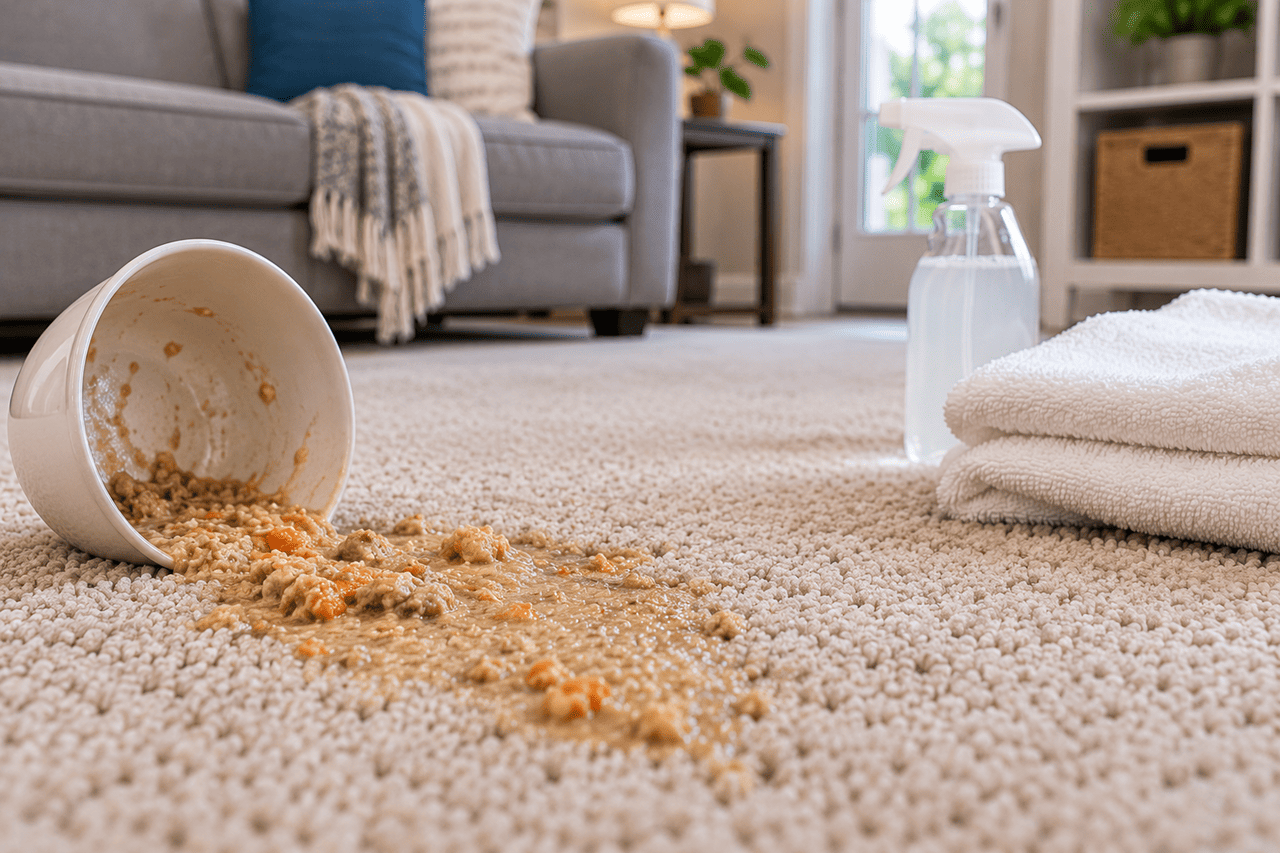
If the area is unusually wet, use clean white towels to absorb excess moisture.
Blot gently.
Do not scrub.
For ordinary tracked-in mud, allow the soil to dry so loose particles can be removed more easily.
Keep the area out of use while it dries.
Once the mud is completely dry, vacuum the affected area slowly.
Use several passes to remove loose dirt.
If discoloration remains after vacuuming, use an appropriate carpet-safe spot cleaner.
Apply a controlled amount and blot carefully.
Dried mud often looks worse than it actually is.
A large brown patch may contain loose soil that can be removed without aggressive cleaning.
If the mud has formed a crust, gently break up the surface using a dull-edged tool or a soft brush suitable for the carpet.
Avoid pulling or damaging the fibers.
Vacuum slowly and thoroughly.
Move in different directions if appropriate for the carpet pile.
This can help collect soil trapped between fibers.
After vacuuming, determine whether the remaining problem is loose dirt or a stain.
If most of the soil is gone, you may only need a small amount of spot cleaning.
Use a product suitable for your carpet.
Follow the manufacturer's instructions.
Avoid pouring large amounts directly onto the carpet.
Use a clean white cloth to blot the stain.
Work from the outside toward the center.
Use another clean cloth lightly dampened with water to remove remaining cleaner as directed.
Blot with a dry towel and allow the carpet to dry thoroughly.
Check the result before repeating treatment.
Muddy footprints often appear in a trail rather than one isolated spot.
You may find them near:
The key is to avoid treating the entire trail as one large wet stain.
Start by removing any loose clumps.
Let ordinary muddy footprints dry, provided the carpet is not heavily saturated.
Then vacuum each footprint thoroughly.
Once the loose soil is removed, identify which spots still need cleaning.
Treat those areas individually using an appropriate carpet-safe product.
This helps prevent unnecessary moisture from spreading across a larger section of carpet.
Mud stains can be particularly noticeable on beige, cream, or white carpet.
Even a small amount of soil may create a dark mark.
However, light-colored carpet is not a reason to automatically use bleach.
Bleach can permanently alter carpet color or damage certain fibers.
Begin with dry soil removal.
Vacuum thoroughly.
Then use an appropriate carpet-compatible spot treatment if discoloration remains.
If the stain is persistent, professional cleaning may be preferable to experimenting with increasingly aggressive chemicals.
Red clay can be especially frustrating because its fine particles and iron-containing minerals may leave strong reddish-brown discoloration.
Removing the physical soil is the first step.
Allow ordinary tracked-in clay mud to dry, then vacuum thoroughly.
If a reddish stain remains, use a carpet-safe product suitable for the carpet material and the type of staining.
Avoid assuming that a household cleaner designed for another surface is appropriate for carpet.
Red clay stains can be stubborn, particularly when they have been repeatedly rubbed or allowed to penetrate deeply.
Professional stain treatment may be necessary in some cases.
Rainy weather increases the likelihood of mud being tracked indoors.
Wet shoes, umbrellas, children's clothing, and pet paws can all carry soil into carpeted areas.
When mud appears after a storm, start by removing excess moisture if necessary.
Then address the soil.
For small muddy footprints, allowing the dirt to dry before vacuuming may be effective.
For larger wet areas, avoid leaving the carpet saturated.
If water has spread beyond the visible mud or reached deeper layers, the situation may require more extensive drying and evaluation.
Dogs can track a surprising amount of mud into the house.
A quick run through the yard may leave muddy paw prints across several rooms.
Start by keeping your dog away from the affected carpet until the paws have been cleaned.
Then remove any large clumps of mud.
Allow ordinary muddy paw prints to dry before vacuuming.
Once the loose dirt has been removed, spot treat remaining stains.
For homes with dogs, washable entry mats and a towel near the door can reduce future mud problems.
Regular vacuuming also helps manage the additional dirt and debris pets bring indoors.
A small amount of mild clear dishwashing liquid diluted in water may help with some remaining mud stains on compatible synthetic carpeting.
However, dish soap should not be the first step while loose soil is still present.
Remove the physical dirt before introducing a cleaning solution.
If you use dish soap, keep the mixture mild.
Apply it to a clean cloth rather than pouring it directly onto the carpet.
Blot gently.
Then use another lightly dampened cloth to remove remaining detergent.
Too much soap can leave residue that attracts dirt.
Vinegar is frequently recommended in homemade carpet-cleaning recipes.
However, it should not be considered a universal solution for mud stains.
Carpet fibers, dyes, and backing materials vary.
Before using vinegar, check the carpet manufacturer's care recommendations.
Test in an inconspicuous area when appropriate.
Avoid saturating the carpet or mixing vinegar with unrelated cleaning chemicals.
For many mud stains, careful drying, vacuuming, and an appropriate carpet-safe spot cleaner are better starting points than experimenting with multiple household ingredients.
Baking soda is often used for household cleaning and odor absorption.
However, it is not a substitute for removing actual soil particles.
If mud is embedded in carpet, the priority should be loosening and vacuuming the dirt.
Applying baking soda over muddy carpet may simply introduce another powder that needs to be removed.
Use products appropriate for the carpet and the specific problem.
Hydrogen peroxide is sometimes suggested for stubborn carpet stains.
However, it can affect carpet color.
This is especially important for darker carpeting and certain specialty fibers.
Before using peroxide, verify that it is compatible with your carpet.
If you are uncertain, avoid experimenting on a visible area.
Professional stain treatment may be safer than risking permanent discoloration.
A carpet-cleaning machine may help with certain soil problems, but loose dirt should generally be removed first.
Using a wet cleaning machine before vacuuming can turn loose soil into muddy residue.
Start with thorough dry soil removal.
Then evaluate whether additional cleaning is needed.
If using a home carpet-cleaning machine, follow the equipment and carpet manufacturer's instructions.
Avoid over-wetting the carpet.
Excessive moisture can increase drying time and create additional problems.
Several common mistakes can make mud stains harder to remove.
Scrubbing can spread soil and push it deeper into the carpet.
Adding water to dry soil may create more mud.
Vacuum first.
Soap residue can attract dirt and make the area appear dirty again.
Too much moisture can increase drying time and spread contamination.
Bleach can permanently alter carpet color.
Combining household products can create safety risks and damage carpet materials.
Aggressive scraping can cut or distort carpet fibers.
If the stain is not responding, stop before creating permanent damage.
Sometimes the visible mud disappears, but the carpet still looks darker than the surrounding area.
There are several possible reasons.
Very small particles may still be trapped between fibers.
The muddy area may already have contained general foot-traffic soil.
Excess detergent can attract additional dirt.
Wet fibers may appear darker than dry carpet.
Allow the area to dry before evaluating the result.
Certain soils may leave discoloration that requires additional treatment.
Yes, some mud stains can become difficult to remove completely.
The outcome depends on:
Many ordinary muddy footprints respond well to drying, vacuuming, and appropriate spot cleaning.
However, clay-heavy soil or long-standing stains may be more challenging.
Wool requires additional care.
Natural fibers may respond differently to moisture, cleaning products, temperature, and agitation.
Avoid assuming that a DIY method suitable for synthetic carpet is appropriate for wool.
Start by removing loose dry soil.
Use a vacuum appropriate for the rug or carpet construction.
For remaining stains, follow the manufacturer's care recommendations.
If the carpet is valuable or delicate, professional evaluation may be preferable.
Area rugs vary significantly in construction.
A machine-made synthetic rug may tolerate cleaning methods that are unsuitable for handmade, wool, or antique rugs.
Remove loose soil carefully.
Avoid saturating the rug.
If the mud has penetrated deeply or the rug has unstable dyes, professional rug-cleaning advice may be appropriate.
Professional carpet cleaning can help remove accumulated soil and many remaining mud stains.
However, results depend on the specific carpet and soil.
Factors include:
Professional cleaning may also help when mud has been tracked across a large area and spot cleaning individual footprints is no longer practical.
Savannah's humid climate and periods of heavy rain can create plenty of opportunities for mud to be tracked indoors.
Homes with outdoor patios, gardens, lawns, and frequently used entryways may experience repeated muddy footprints.
This is particularly common when children or pets move between outdoor areas and carpeted rooms.
The problem is not limited to residential properties.
Offices, shops, and other businesses may also experience increased tracked-in soil during wet weather.
Regular vacuuming, entrance mats, and prompt attention to muddy areas can help reduce the amount of soil that accumulates.
When the carpet becomes heavily soiled, professional cleaning may be appropriate.
Sani-Kleen of Savannah LLC has provided carpet-cleaning services throughout the Savannah area since 2003.
Our services include residential carpet cleaning, commercial carpet cleaning, sanitizing and odor elimination, upholstery and furniture cleaning, and area rug cleaning.
We use eco-friendly, fast-drying cleaning methods designed to refresh carpets without unnecessarily long drying periods.
Whether your carpet has muddy footprints, accumulated dirt, pet-related stains, or other stubborn spots, Sani-Kleen can help evaluate your cleaning needs.
Preventing mud from entering the home is easier than repeatedly removing it.
Place suitable mats outside and inside frequently used doors.
A shoe-removal routine can reduce tracked-in dirt.
Wipe muddy paws before pets enter carpeted rooms.
Keeping walkways clear and reducing exposed muddy areas near entrances can help.
Frequent vacuuming removes loose soil before it becomes deeply embedded.
Do not allow muddy areas to receive repeated foot traffic.
Routine professional carpet cleaning can help remove accumulated soil that ordinary vacuuming does not fully address.
The appropriate cleaning schedule depends on how much soil enters the home.
A household with several pets and frequent outdoor activity may need more attention than a home with little foot traffic.
Vacuuming should be adjusted to the amount of dirt being tracked indoors.
Professional cleaning frequency also depends on carpet condition, manufacturer guidance, and household use.
Rather than relying on one schedule for every home, monitor traffic lanes, visible soil, and recurring stains.
For ordinary muddy footprints, allow the mud to dry, then vacuum thoroughly. Treat remaining stains with an appropriate carpet-safe cleaner.
For small amounts of tracked-in mud, letting it dry before vacuuming often prevents smearing. If there is significant liquid or saturation, blot excess moisture promptly rather than leaving the carpet wet.
Gently loosen hardened soil, vacuum thoroughly, and spot treat any remaining discoloration with a carpet-compatible cleaning product.
A small amount of mild dishwashing liquid diluted in water may help with some remaining stains on compatible synthetic carpeting. Remove loose dirt first and avoid excessive detergent.
Some soils, especially those containing fine clay or strong mineral pigments, may leave persistent discoloration. Results depend on the carpet and the stain.
Allow ordinary tracked-in clay mud to dry, vacuum thoroughly, and use an appropriate carpet-safe stain treatment. Persistent reddish discoloration may require professional attention.
Avoid vacuuming wet mud with a standard household vacuum. Remove excess moisture as needed, then vacuum once the soil is dry.
Professional cleaning can help with many mud stains and accumulated soil. Results depend on the carpet material, soil composition, stain age, and previous cleaning attempts.
Consider professional assistance when:
Professional cleaning may be especially useful when mud is only one part of a larger accumulated-soil problem.
If muddy footprints, tracked-in dirt, pet accidents, or stubborn stains have left your carpet looking worn, Sani-Kleen of Savannah LLC can help.
We provide professional carpet cleaning throughout Savannah and surrounding communities, including Pooler, Richmond Hill, Port Wentworth, Garden City, Wilmington Island, Tybee Island, Rincon, Springfield, Guyton, and Skidaway Island.
Sani-Kleen has served the area since 2003 and offers eco-friendly, fast-drying carpet-cleaning services.
Call Sani-Kleen of Savannah at (912) 414-0652 to request a quote or schedule professional carpet cleaning.