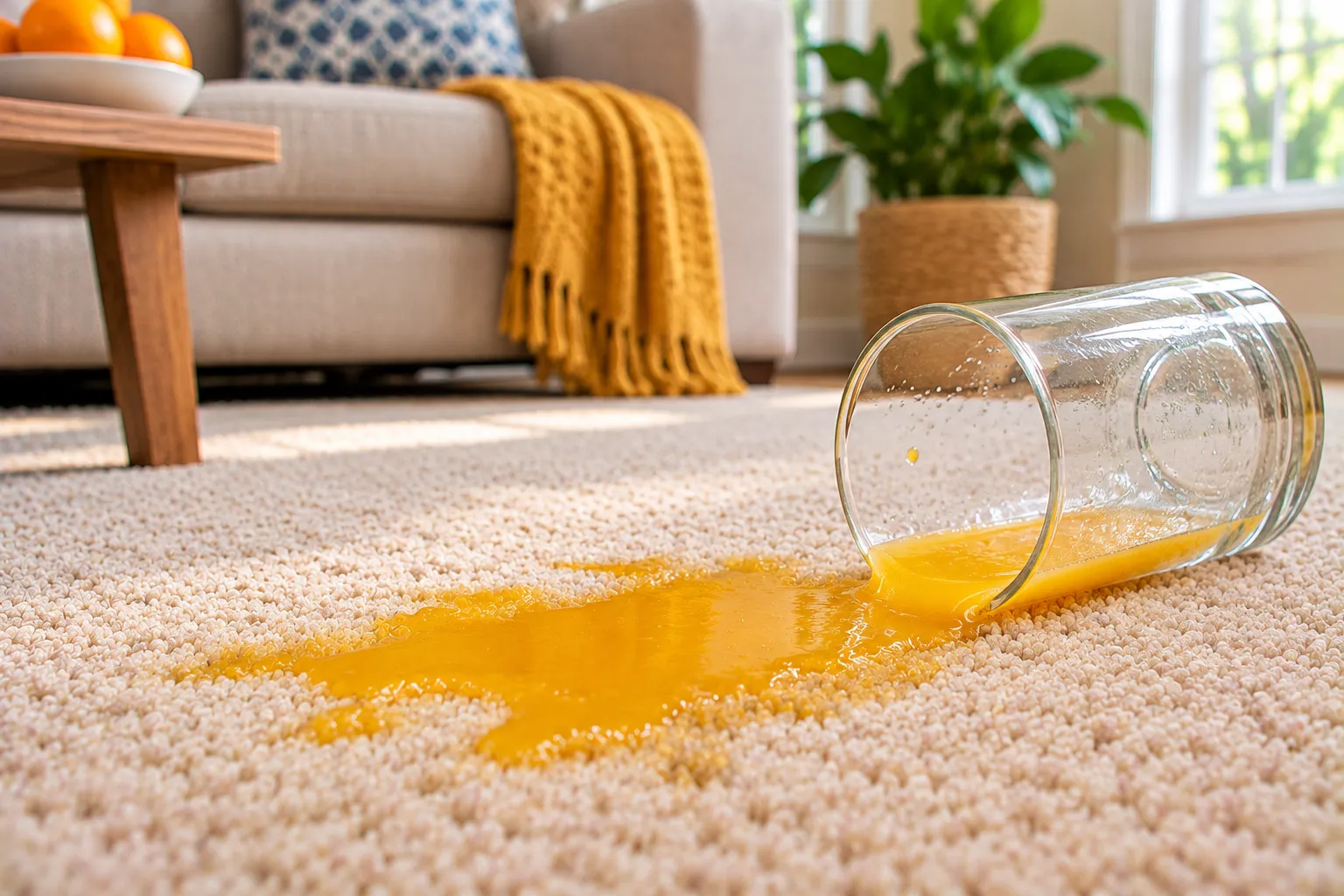
A spilled glass of juice can leave a surprisingly stubborn carpet stain. Whether it's orange juice at breakfast, apple juice in a child's playroom, or dark grape juice during a family gathering, colorful liquid can soak into carpet fibers within seconds.
The problem is not always limited to the visible color. Fruit juices may contain natural pigments, sugars, acids, and other ingredients that leave residue behind after the liquid dries.
Some juice stains respond well to prompt cleaning. Others, particularly dark-colored or dried spills, can be more difficult to remove completely.
If you're wondering how to get juice out of carpet, the most important thing is to act carefully rather than scrub aggressively or soak the stain with cleaning products.
In this guide, you'll learn how to handle fresh juice spills, remove dried juice residue, treat different types of fruit juice, and recognize when professional carpet cleaning may be appropriate.
Fruit juice contains water along with varying amounts of sugar, natural acids, and colored compounds.
When juice spills onto carpet, the liquid can move between individual fibers and into the carpet pile.
The visible stain depends partly on the type of juice.
For example:
Juice stains can become more difficult to address when the liquid dries.
The water evaporates, but sugars and colored residue may remain attached to the fibers.
Foot traffic can then introduce dirt into the sticky area, making the spot look darker over time.
Quick action can help limit how deeply a spill penetrates.
Move cups, plates, toys, or furniture away from the spill so they do not spread the liquid.
Use a clean white towel or plain white paper towels to absorb the juice.
Press gently and lift.
Avoid rubbing back and forth.
Begin at the outer edge of the spill and move toward the center.
This helps reduce spreading.
As the towel becomes wet or stained, switch to a clean section.
Before applying a cleaning solution, identify whether the carpet is synthetic, wool, or another material.
Follow the manufacturer's care instructions whenever available.
Do not pour large amounts of water directly onto the stain.
Too much moisture can spread the juice and increase drying time.
Fresh juice is generally easier to address before the liquid dries.
For compatible synthetic carpeting, a mild cleaning approach may be enough for a small spill.
Blot with a clean white cloth.
Continue until little additional liquid transfers.
If the carpet manufacturer permits water-based cleaning, a small amount of mild clear dishwashing liquid diluted in water may help loosen sugary residue.
Use only a small amount of detergent.
Lightly dampen a clean white cloth with the solution.
Avoid pouring it directly onto the carpet.
Work from the outside toward the center.
Do not scrub.
Use another clean cloth lightly dampened with water to remove remaining cleaning solution.
Avoid over-wetting the carpet.
Press a clean, dry towel against the area to absorb moisture.
Provide appropriate airflow.
Inspect the area after drying to determine whether any discoloration or stickiness remains.
Dried juice stains can be more challenging because the liquid has evaporated, leaving concentrated residue behind.
The stain may feel sticky or stiff.
Look for discoloration, stickiness, or hardened residue.
If crumbs or other dry particles are present, remove them carefully.
For water-cleanable carpet, use a clean cloth lightly dampened with water to soften the dried juice.
Do not saturate the carpet.
Choose a product appropriate for the carpet material and food-related stains.
Follow the manufacturer's instructions.
Use clean sections of the cloth as residue transfers.
Follow the product's rinsing instructions without over-wetting.
Allow the area to dry thoroughly.
If a colored stain remains, further treatment may be necessary.
Orange juice is a common breakfast spill.
Although it may appear lighter than grape or cranberry juice, it can still leave yellow-orange discoloration.
Orange juice may also contain pulp.
If visible pulp is present, carefully lift it with a spoon.
Avoid grinding it into the carpet.
Use clean white towels to absorb as much juice as possible.
For compatible synthetic carpeting, use a mild carpet-safe cleaning solution.
Use a lightly dampened cloth to remove cleaning residue.
Allow the carpet to dry before evaluating the result.
If an orange mark remains, avoid repeatedly applying stronger household chemicals.
Apple juice may not leave a dramatic stain immediately.
However, its sugar content can leave sticky residue.
A spot that looks clean while wet may later attract dirt.
Start by blotting the spill.
For compatible carpeting, use a mild water-based carpet cleaner to address the sugary residue.
Remove remaining detergent according to the product instructions.
Blot dry.
After the area dries, check whether it still feels sticky.
If it does, additional residue may remain.
Avoid using excessive soap, which can create another source of stickiness.
Grape juice is often more challenging because of its dark purple pigments.
A spill can create a noticeable stain on beige, cream, or white carpeting.
Use clean white towels.
Avoid rubbing.
Adding too much water can spread the colored liquid.
Choose a product labeled for compatible carpet materials and colored food or beverage stains.
Follow its directions.
Dark pigment may remain even after much of the liquid has been removed.
If the purple stain persists, professional spot treatment may be appropriate.
Do not automatically apply bleach or strong oxidizing chemicals.
Cranberry juice can leave bright red or pink discoloration.
The cleaning approach depends on the carpet material and the specific beverage.
Some cranberry drinks contain added sugars or other ingredients.
Begin by blotting the liquid.
Avoid spreading it.
Use a carpet-compatible cleaning product.
Remove cleaning residue according to the product instructions.
Allow the carpet to dry.
If the red stain remains, avoid repeated applications of unverified chemicals.
Fruit punch can be particularly challenging because it may contain added colorants.
These colorants can behave differently from natural fruit pigments.
Start by blotting the spill immediately.
Do not scrub.
Check the carpet manufacturer's instructions before applying any cleaner.
Use a product appropriate for the carpet and the stain.
If bright red, blue, or purple discoloration remains, professional evaluation may be helpful.
Some artificial dye stains are difficult to remove completely.
Red juice stains are especially noticeable on light carpeting.
The source might be cranberry juice, cherry juice, fruit punch, or a mixed-fruit beverage.
Identifying the drink can help determine the appropriate treatment.
For fresh spills, blot immediately.
For dried stains, gently soften residue on water-cleanable carpet before applying a compatible cleaner.
Avoid using bleach.
Even white or cream carpet can contain dyes and finishes that may be damaged.
If the stain remains after careful treatment, consider professional assistance.
White and cream carpets make colorful juice stains highly visible.
However, using stronger chemicals is not necessarily safer.
Do not assume that chlorine bleach is appropriate for white carpeting.
Bleach can alter carpet fibers, dyes, or finishes.
Start by absorbing the spill.
Use a carpet-compatible stain remover.
Avoid scrubbing or saturating the area.
If discoloration persists, professional stain treatment may be preferable to repeated DIY experiments.
Wool carpeting requires extra care.
Natural fibers can respond differently to cleaning products, moisture, and agitation.
Avoid excessive water.
Do not use strong household chemicals without confirming compatibility.
Blot fresh juice carefully.
For valuable wool carpeting, professional evaluation may be the safer option.
Area rugs vary in construction.
A synthetic machine-made rug may tolerate cleaning methods that are unsuitable for a handmade, wool, or antique rug.
If juice spills onto an area rug:
Some rugs contain dyes that may bleed when exposed to water or cleaning products.
A small amount of mild clear dishwashing liquid diluted in water may help remove sugary residue from compatible synthetic carpeting.
However, dish soap is not guaranteed to remove every colored juice stain.
Use only a small amount.
Apply it with a cloth.
Avoid soaking the carpet.
Remove remaining detergent after treatment.
Excess soap can attract dirt and leave a sticky spot.
Vinegar is frequently recommended in homemade carpet-cleaning recipes.
However, it is not a universal solution.
Different juices contain different pigments and ingredients.
Vinegar may not remove certain colorants and may be unsuitable for some carpet materials.
Check the manufacturer's care instructions before using acidic cleaning products.
Never mix vinegar with chlorine bleach.
Baking soda is commonly used in household cleaning, but it should not be expected to remove every juice pigment stain.
For fresh juice, blotting the liquid is the first priority.
For dried juice, the remaining sugars and pigments require appropriate treatment.
Adding baking soda does not replace careful stain removal.
Avoid creating a paste with multiple household chemicals unless the carpet manufacturer specifically supports the method.
Hydrogen peroxide appears in some stain-removal recommendations because it can affect certain colored compounds.
However, it can also alter carpet dyes.
Using peroxide without confirming compatibility may create permanent discoloration.
This is particularly important for darker carpeting, wool, and specialty rugs.
If the carpet manufacturer does not support the treatment, avoid experimenting.
Professional advice may be safer for stubborn colored stains.
A carpet-cleaning machine may help remove certain types of residue when used appropriately.
However, a machine is not always the best first response to a small juice spill.
Before using one:
Some colored stains require targeted spot treatment rather than general cleaning alone.
Sticky carpet often indicates that sugary residue remains.
Even when the visible color disappears, sugar may still be present.
Excessive detergent can also leave sticky residue.
If the carpet feels sticky after drying, additional cleaning may be necessary.
Use a carpet-compatible product and avoid adding more soap than recommended.
Allow the area to dry before evaluating the result.
Sometimes a juice stain looks lighter while the carpet is wet but becomes noticeable again as it dries.
Possible explanations include:
Allow the carpet to dry completely before deciding whether the stain has returned.
If the discoloration persists, avoid repeatedly saturating the area.
Professional evaluation may help determine whether further treatment is appropriate.
Yes.
Some juice stains can leave permanent discoloration.
The outcome depends on:
A small fresh apple juice spill may be easier to address than a large dried grape juice or fruit punch stain.
Complete removal cannot be guaranteed in every situation.
Several mistakes can make the problem worse.
Scrubbing can spread the stain and damage fibers.
Too much water can spread residue and increase drying time.
Bleach can permanently alter carpet color.
Combining household cleaners can create safety risks.
Soap residue can attract dirt.
High heat may damage certain carpet fibers and is not an appropriate general-purpose stain-removal method.
If a stain is not responding, stop before causing additional damage.
Professional carpet cleaning may improve or remove many juice stains.
However, results depend on the type of juice, carpet material, stain age, and previous treatments.
Some stains may require specialized spot treatment.
Others may leave permanent discoloration.
A responsible cleaning professional should evaluate the affected area before promising a particular result.
If possible, explain which beverage caused the stain.
Also mention any cleaning products you have already used.
Juice spills are common in homes with children, pets, and frequent visitors.
However, everyday household stains are not limited to fruit drinks.
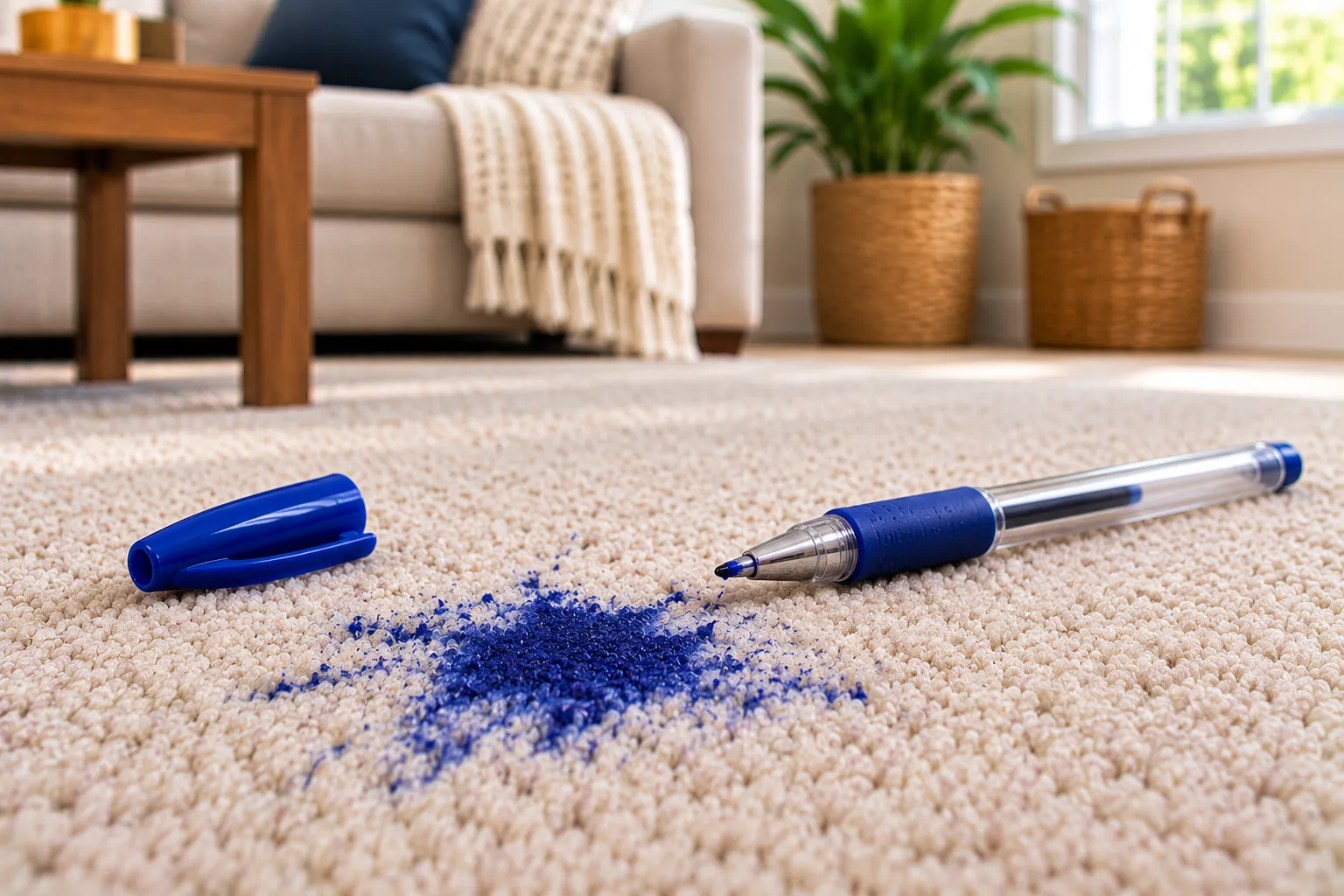
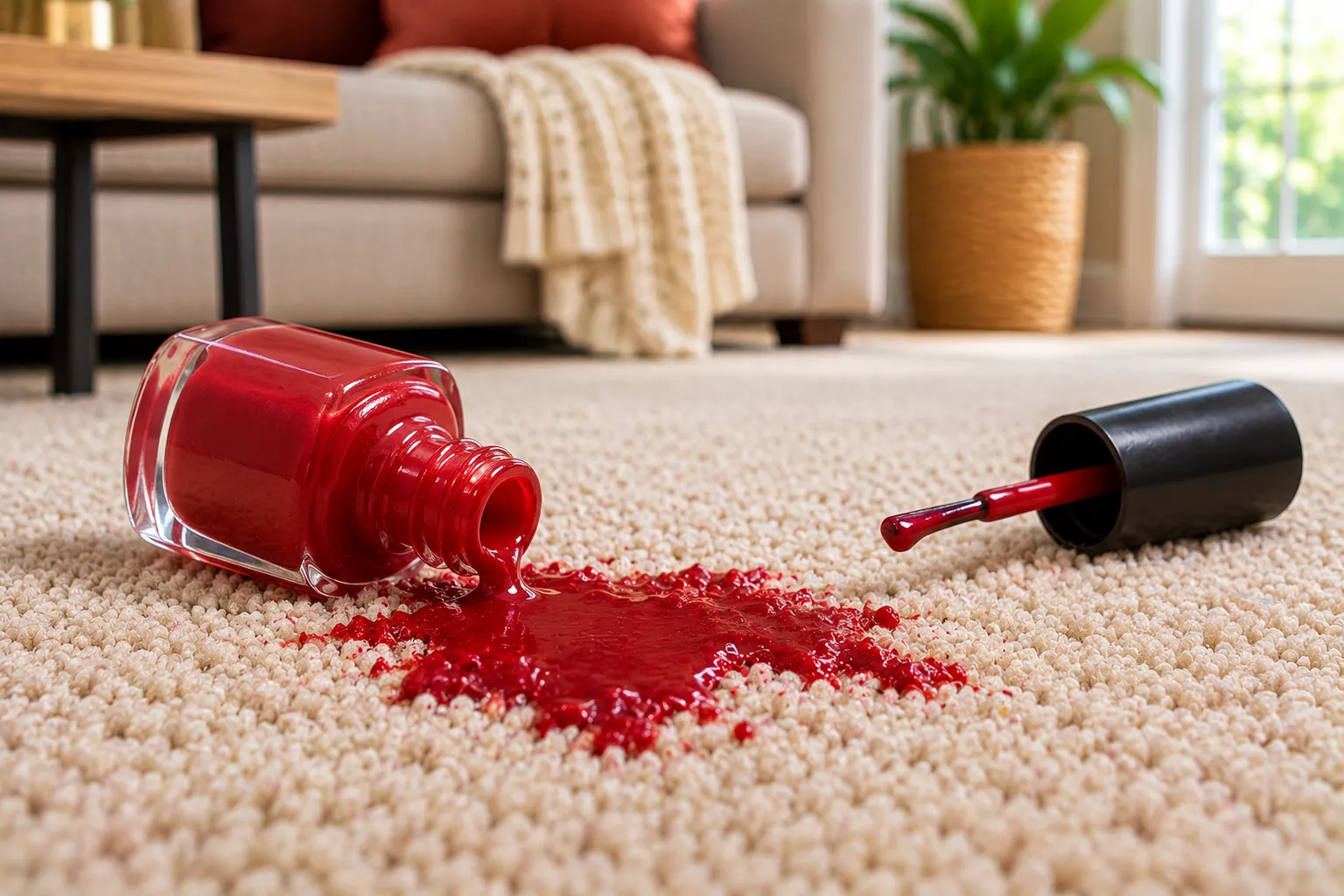
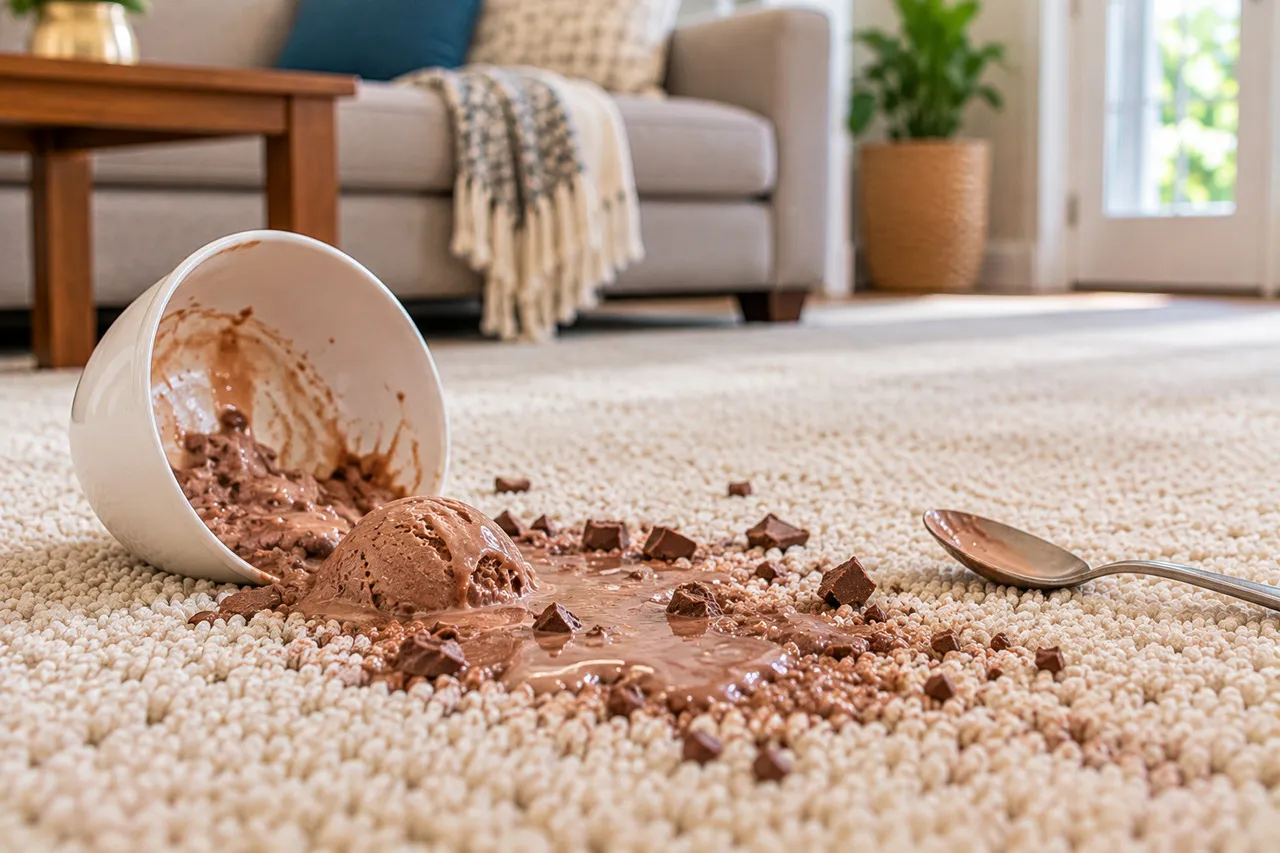
Coffee, chocolate, makeup, paint, ink, and pet accidents can also leave stubborn marks.
When careful DIY cleaning does not resolve the problem, professional carpet cleaning may be the next step.
Sani-Kleen of Savannah LLC has provided carpet-cleaning services throughout the Savannah area since 2003.
Our services include residential carpet cleaning, commercial carpet cleaning, moving-in and moving-out carpet cleaning, sanitizing and odor elimination, upholstery and furniture cleaning, and area rug cleaning.
We use eco-friendly, fast-drying cleaning methods to help refresh carpets and maintain their appearance.
If you have a stubborn juice stain, contact Sani-Kleen to discuss the affected area and available cleaning options.
A few simple habits can reduce the likelihood of spills.
Lidded cups may help reduce accidental spills, especially in homes with young children.
Encourage children to enjoy juice at a table or another easy-to-clean surface.
Cups left on carpet can be knocked over by people or pets.
Place drinks on sturdy tables rather than unstable furniture edges.
Fresh juice is generally easier to address than dried residue.
Vacuuming and appropriate spot treatment can help maintain the appearance of carpeting.
Family rooms often experience frequent foot traffic and occasional spills.
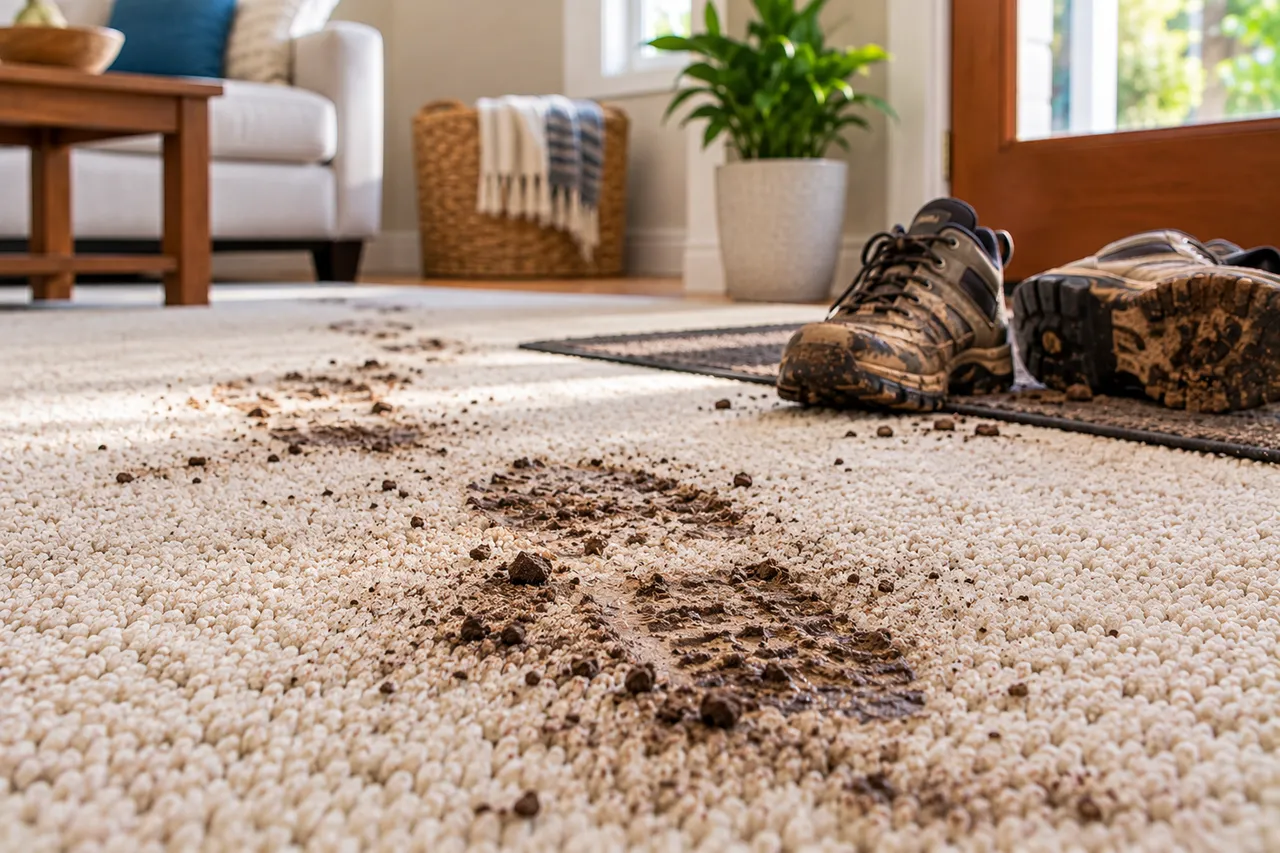
Common sources of stains include:
Regular vacuuming helps remove loose debris.
Prompt spot treatment can reduce the chance of stubborn stains.
Avoid excessive detergent and harsh chemical mixtures.
Periodic professional carpet cleaning can help maintain the overall appearance of frequently used areas.
Blot the spill immediately with a clean white cloth. For compatible carpeting, use an appropriate carpet-safe cleaner and remove remaining residue without soaking the area.
Lightly soften dried residue on water-cleanable carpet, apply a compatible cleaning product, blot carefully, and allow the area to dry.
Yes. Orange juice can leave yellow-orange discoloration and sticky residue, particularly on light-colored carpeting.
Blot fresh grape juice immediately and use a carpet-compatible stain remover. Dark purple stains may require specialized treatment.
Blot the spill, treat remaining sugary residue with an appropriate cleaner, remove detergent residue, and dry thoroughly.
Vinegar is not a guaranteed solution and may not be appropriate for every carpet material.
Baking soda does not reliably remove all juice pigments. Proper blotting and compatible cleaning products are more important.
Professional treatment may improve or remove many juice stains. Results depend on the beverage, carpet material, stain age, and previous cleaning attempts.
Consider professional assistance when:
The goal is to improve the stain without causing unnecessary carpet damage.
If juice, coffee, chocolate, ink, pet accidents, or other stubborn stains have left your carpet looking less than its best, Sani-Kleen of Savannah LLC can help.
We provide professional carpet cleaning throughout Savannah and surrounding communities, including Pooler, Richmond Hill, Port Wentworth, Garden City, Wilmington Island, Tybee Island, Rincon, Springfield, Guyton, and Skidaway Island.
Sani-Kleen has served the area since 2003 and offers eco-friendly, fast-drying carpet-cleaning services.
Whether you're dealing with stubborn stains, pet odors, or everyday dirt, contact our team to discuss your cleaning needs and request a quote.
Call Sani-Kleen of Savannah at (912) 414-0652 to request a quote or schedule professional carpet cleaning.