.png)
Grease is perhaps the most persistent and frustrating contaminant in any home. Whether it's a splatter of bacon fat on your favorite shirt, a sticky film coating your kitchen cabinets, or a deep-set stain ruining your plush living room carpet, grease presents a unique cleaning challenge. It seems to defy simple water rinsing, clinging tenaciously to surfaces and fibers. The struggle with stubborn, oily grime is a universal experience, particularly in homes located in bustling areas like Savannah, GA, where high humidity can sometimes make oil-based residue even stickier. But mastering the skill of how to get rid of grease is less about scrubbing harder and more about understanding the simple chemistry behind fat removal. Once you recognize the fundamental principles of using surfactants and solvents, you can tackle any greasy mess effectively and safely. If you're in a nearby area, professional help is also available through professional carpet cleaning services in Pooler, GA.
This comprehensive guide will break down the techniques required for grease removal across the three main zones of contamination: hard kitchen surfaces, washable fabrics and clothing, and the porous fibers of carpets and upholstery. Knowing the right agent for the right surface will not only save you time and effort but will also protect your valuable materials from damage.
To successfully defeat grease, we first need to understand why it’s so resistant to plain water. The answer lies in its nonpolar nature.
Grease and oil molecules do not carry an electrical charge and are therefore hydrophobic, meaning they repel water molecules (which are polar). As the old saying goes, oil and water don’t mix. When you spray water on a grease spot, the water molecules stick to each other and roll right over the oil without dissolving it.
The key to learning how to get rid of grease is introducing an intermediary, a cleaning agent that can interact with both the nonpolar grease and the polar water. These agents fall into two main categories:
The best example of a surfactant is standard dish soap. Surfactant molecules have two parts: one end is attracted to water, and the other end is attracted to oil.
Solvents are nonpolar liquids (like mineral spirits or dry-cleaning fluids) that dissolve grease by bypassing the need for water entirely.
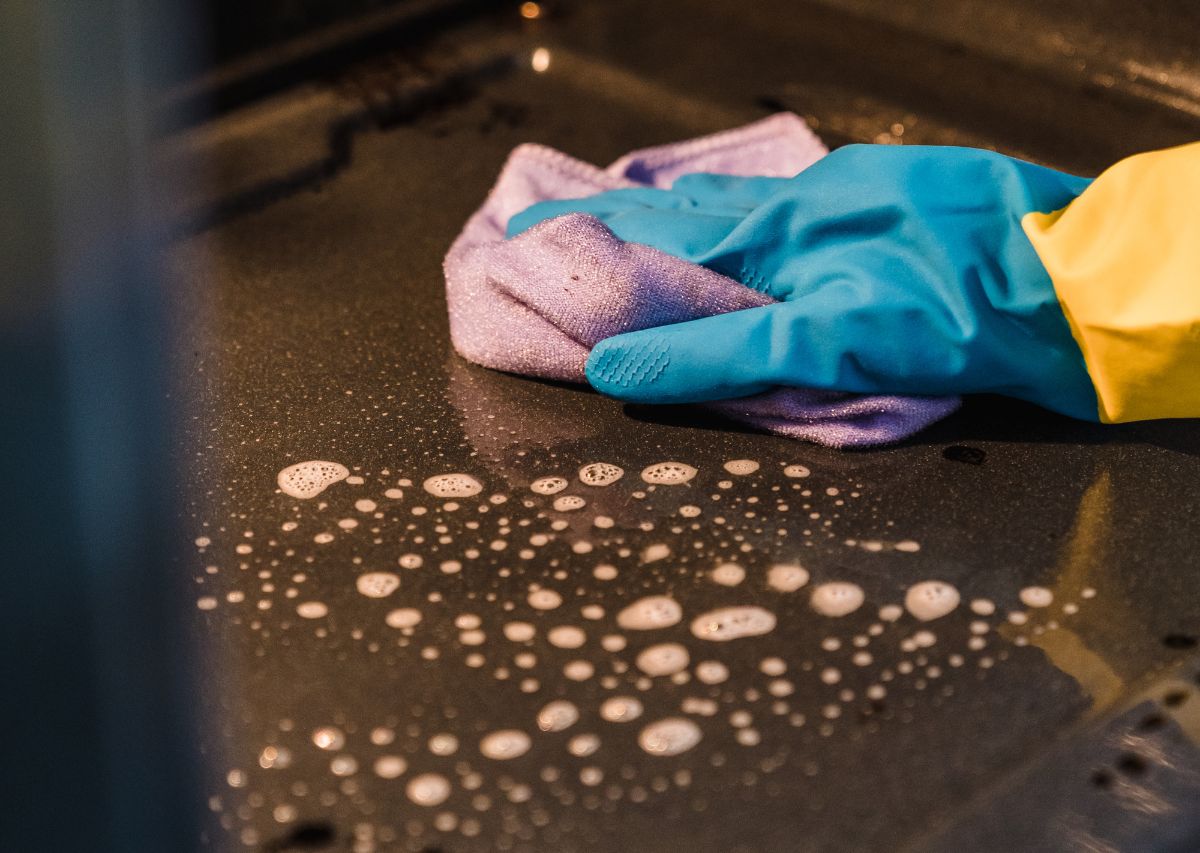
For daily and light grease, the solution is simple: dish soap + hot water.
Baked-on grease requires stronger alkaline agents and long soaking times.
Always avoid alkaline degreasers on sensitive stones like marble or unsealed granite.
Grease stains on clothing require two phases: absorption and emulsification.
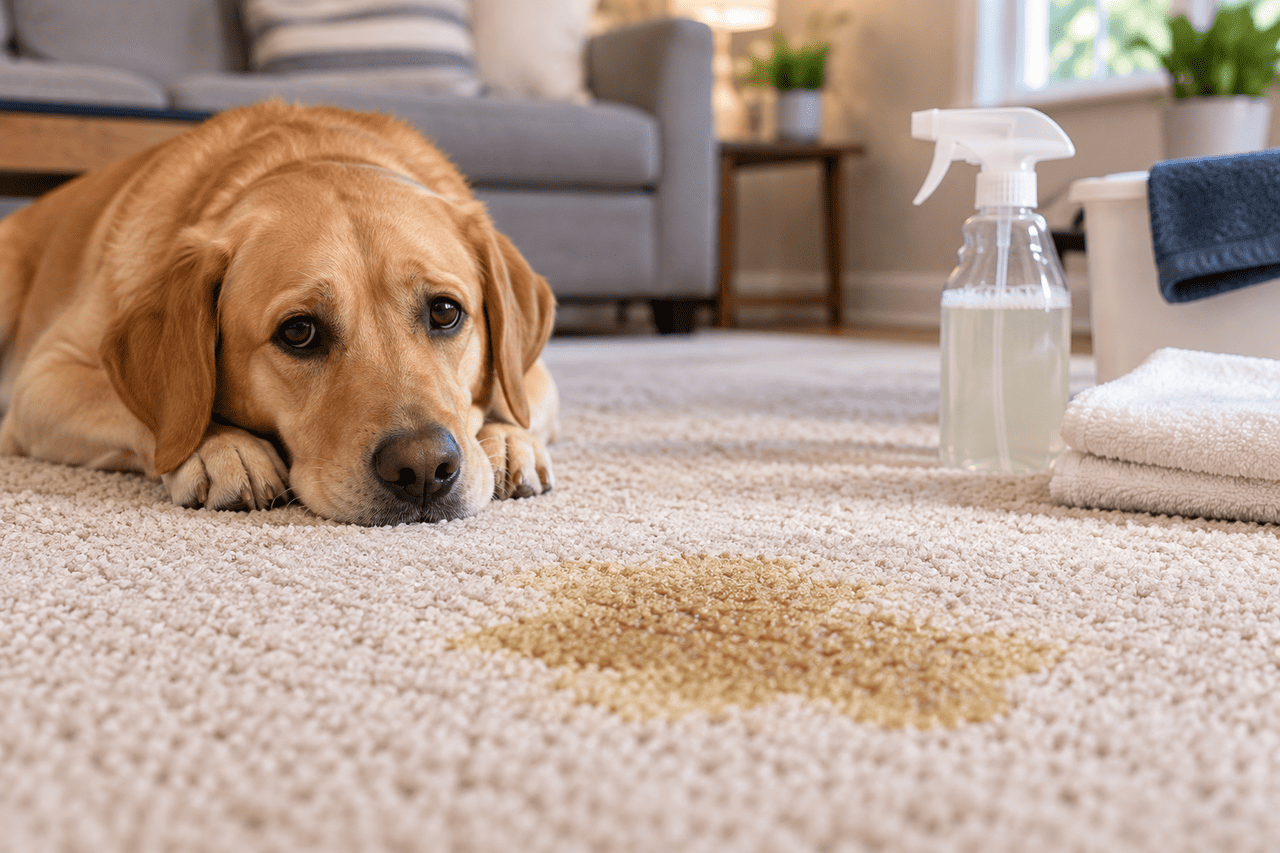
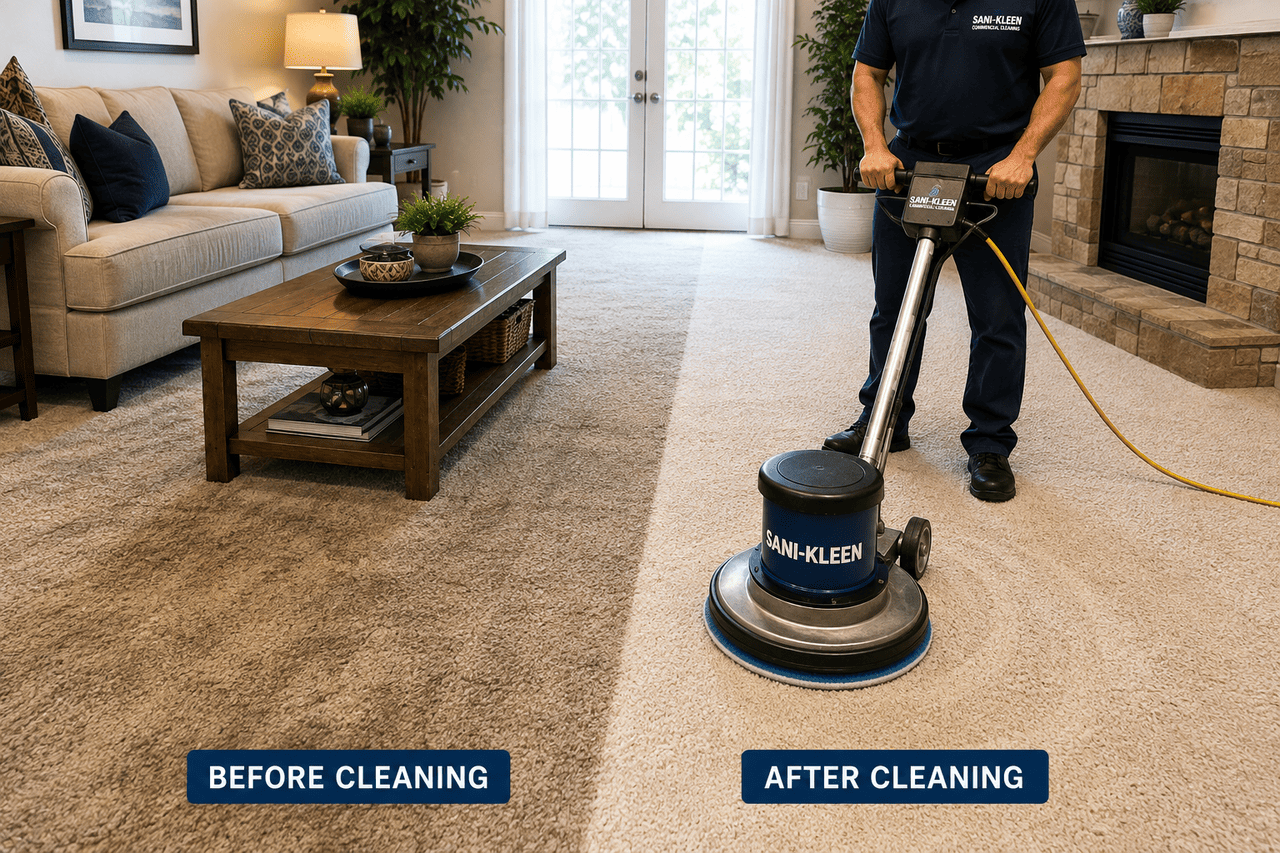
Removing grease from carpets is the hardest because thick fibers absorb deep into the backing. This is also the ideal point to introduce a contextual internal link to another nearby service area, such as carpet cleaning experts in Richmond Hill, GA.
Sani-Kleen uses:
Grease residue attracts dirt rapidly, so professional extraction ensures a truly clean and residue-free fiber.
The key to learning how to get rid of grease is prevention and chemical intelligence. Clean up splatters immediately while still warm, choose the correct cleaning agents, and call professionals when the contamination is deep.
If you have stubborn grease or oil stains deeply set in your carpets, rugs, or upholstery that DIY methods cannot safely remove, please consider the professional cleaning services offered by Sani-Kleen. For homeowners in nearby service areas, you can also reach out to the Sani-Kleen service team in Port Wentworth, GA. To discuss your cleaning needs, call (912) 4140652 or email sanikleenofsavannah@gmail.com.
1. Why is dish soap so effective for learning how to get rid of grease compared to regular detergent?
Dish soap contains surfactants, which are molecules with a water-attracting (hydrophilic) end and a grease-attracting (lipophilic) end. These surfactants surround the nonpolar grease molecules, forming micelles that can be easily rinsed away with water, a process called emulsification.
2. What is the best immediate step to take when a grease stain occurs on clothing or upholstery?
The most crucial immediate step is absorption. Gently blot the area to remove excess grease, then cover the stain completely with an absorbent powder like cornstarch, baking soda, or talcum powder. Allow it to sit for at least 15 minutes to pull the oil out before vacuuming or brushing it off.
3. Is it safe to use commercial degreasers on all kitchen countertop materials like granite or marble?
No. Most heavy-duty degreasers are alkaline, which can etch and dull natural stone countertops like marble, limestone, or unsealed granite. For these surfaces, use a gentle, pH-neutral dish soap solution or a degreaser specifically formulated as safe for stone surfaces to avoid damage.
4. How can I safely degrease the permanent, built-up grime inside my oven or on the range hood filters?
For the oven, a paste of baking soda and water works well; let it sit overnight before scrubbing. For metal range hood filters, soak them in a strong solution of very hot water and a heavy-duty degreaser or dishwasher detergent. This saponifies the thick, baked-on grease effectively.
5. When should I stop using DIY methods and call a professional service like Sani-Kleen to address grease?
You should contact a professional when grease stains on carpet or upholstery are deep, older than 24 hours, or when DIY solvent attempts leave a permanent ring or residue. Professionals have specialized extraction equipment and industrial-grade solvents to safely remove deeply embedded grease in fibers.




%20(1).png)